


Bone and Joint Institute of Tennessee’s board-certified total joint replacement specialists Cory Calendine, M.D., and Brian Perkinson, M.D., sat down to discuss the process of total joint replacement, what makes a good candidate for surgery and what the recovery process entails.
Q: What is the process for a total joint replacement?
Perkinson: The process with total joint replacement is coming to see us in the clinic first, and getting evaluated for what your disease process is within your joint. We’ll educate you on that and talk about conservative measures to see whether or not you’ve already done those, if you will need to do those, and how you might respond to those. Then, we start to move into surgical options, and we start to talk about the process of surgery.
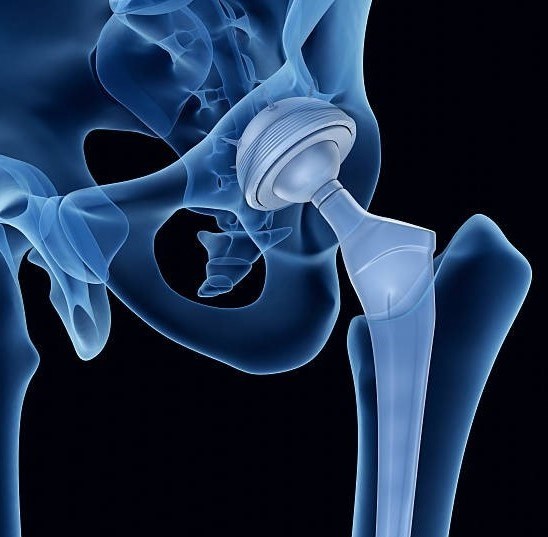
Joint replacement, in general, is where we take out the arthritic bone and replace or resurface the bone with metal and plastic to give your body a new bearing surface. With our new techniques and accelerated recovery programs, we try to do the least invasive process possible, and it’s a process that has been much improved over the last decade.
Calendine: Dr. Perkinson said it well – first we have to figure out the problem. There are a lot of people out there who have hip pain, but the problem could end up being their spine. Getting the right diagnosis first is important. If there’s a way to cure you’re pain without surgery, we want to do that.
Dr. Perkinson and I both have a focus on joint replacement, particularly hip and knee replacement; but if there’s an option short of surgery, we always explore that first. The problem with arthritis is that the cartilage between the bones wears away. Whether it’s a hip or knee, the cartilage wears thin like the tread on a tire. Once that cartilage is gone and your joint is bone on bone, we’re going to replace it. We substitute that damaged bone with metal and plastic.
It’s a little different joint to joint, hip to knee; but when the cartilage is gone, metal and plastic is often the answer.
“IF THERE’S A WAY TO CURE YOUR PAIN WITHOUT SURGERY, WE WANT TO DO THAT.” – DR. CALENDINE
Q: How does pain vary from patient to patient?
Calendine: For me, it’s about quality of life. Some people talk a lot about pain. Some people don’t complain of pain, but they realize their quality of life is low. Instead of having pain, they quit doing activities with their grandkids, they stop going shopping when they want to, they stop showing up for extra social events and just eliminate that from their lives.
While pain is obviously a factor, it’s really quality of life that I try to focus on. When we can’t achieve the quality of life we want without surgery, that’s when we end up talking about joint replacement.
Perkinson: Our goal is to get you back to the activities you enjoy and love. Pain is a variable. You could have a patient come in and say they have no pain, but really they’re not doing anything. They’re not playing with their grandkids anymore, they’re not getting out and enjoying life, and they’re not hiking or walking. Then you’ll have a patient who makes themselves do those things, but they still have tremendous pain.
What we want to assess is what can you do and what can you not do, and what can we allow you to return to functionally after we do the surgery?
Q: What are the options you try before surgery?
Perkinson: There are times when we go straight to surgery. If you have really bad hip arthritis that is destructive and there’s nothing we can do to prevent surgery from occurring, we will go straight to surgery when necessary. But, most of the time, we see people early in the process.
We start with activity modification:
- Non-impact exercise
- Weight-loss management
- Healthy nutrition.
We then move to medicines:
- Anti-inflammatory medication
- Cortisone
- Hyaluronic acid
- Topical medications
There are many different modalities we can try, and a lot of it is lifestyle to see if we can live within this arthritis.
Q: Who would be a good candidate for surgery?
Calendine: Sometimes we have to do surgery on people way younger than we want to. Our expectations as a society are higher, which has lowered the average age that people have a joint replaced. When joint replacement was originally prescribed, you had to be 70 or 80 and completely debilitated before you would get a joint replaced. Now, the average age is approaching 60, which means half the people having a joint replacement are likely less than 60, and half are over.
So, there’s not a specific age that we’re focused on. Unfortunately, I’ve had to do a joint replacement on someone as young as 22. Even though surgery is usually our last option, joint replacement is the only thing that cures arthritis, so occasionally we do it much sooner.
All the things we try to do to get you back to life without surgery are simply managing the problem of arthritis. The only cure is joint replacement. Sometimes you’re pushed to the cure because of the quality of life, and that’s independent of age.
I think it’s great that patients are coming to me now, not asking for help to get out of bed, but asking for the ability to do the daily things they love. They’re asking to be more active, to return to that high quality of life, and with the improvements we’ve made in joint replacement, we can get people there with less pain and a faster recovery.
“OUR GOAL IS TO GET YOU BACK TO THE ACTIVITIES YOU ENJOY AND LOVE.” – DR. PERKINSON
Q: What are some factors that would delay or prevent surgery?
Perkinson: That’s a hard thing to isolate because it’s so patient-dependent. I tell my patients we do not age-discriminate; we health-discriminate. Dr. Calendine and I have both done surgeries on patients who are 85–90 years old, but they’re healthy patients who can undergo this process and find benefit through it. Some factors that may delay or prevent surgery are:
- Heart disease
- Kidney disease
- Lung disease
- Severe liver disease
- Uncontrolled diabetes
- Obesity
There are modifiable risk factors, things we can have the patient change to become a candidate for surgery, and there are things that are non-modifiable that are not safe enough to undergo the surgery. So, we have to have that conversation openly with our patients.
Having an open wound prior to an elective surgery is an example of something that would be a bad idea. We would really want that wound to heal because the surgery doesn’t have to be performed this week. We can give it time for that wound to heal, and we have the ability to get you into wound care and help that heal properly.
For more information, contact our office to schedule an appointment today.
Article Source: Bone and Joint Institute of Tennessee Blog

.png)


