Why Knee Balancing During Mako Robotic Knee Replacement Matters for Your Recovery
By Dr. Cory Calendine, MD | Orthopedic Surgeon | Nashville, TN
If you're scheduled for a Mako robotic knee replacement or you're researching the procedure, you've likely heard the term "knee balancing." But what does that actually mean for you as a patient? Knee balancing refers to the careful adjustment of soft tissues, ligaments, and implant position so that forces distribute evenly across your new knee joint. Getting this right during surgery is one of the single most important factors in how stable, comfortable, and natural your knee will feel after recovery. The Mako robotic system gives surgeons real-time data to fine-tune this balance with a level of precision that wasn't possible with traditional techniques alone.
What Is Knee Balancing in Total Knee Replacement?
Your knee joint relies on a partnership between bones, cartilage, and soft tissues. The ligaments on the inner (medial) and outer (lateral) sides of your knee act like guide wires, keeping the joint stable as you bend and straighten your leg. During a total knee replacement, the damaged bone surfaces are replaced with metal and plastic components. But the ligaments and soft tissues surrounding the joint stay in place.
Knee balancing is the process of making sure those remaining ligaments and soft tissues are tensioned correctly so the new implant sits just right. The goal is to create what surgeons call "balanced flexion and extension gaps." In plain terms, that means your knee should feel equally stable whether it's fully straight or bent at 90 degrees.
When a knee isn't properly balanced, patients can end up with a joint that feels too tight, too loose, or unstable in certain positions. That imbalance can lead to pain, stiffness, and in some cases, the need for additional surgery down the road.
Why Soft Tissue Balance Is So Critical to Your Outcome
Here's something most patients don't realize: research shows that with traditional manual instruments alone, surgeons achieve a quantitatively balanced knee in only about 50% of cases. That's not because of a lack of skill. It's because the human hand can only detect so much.
Studies have demonstrated that a surgeon's subjective feel of ligament balance matches what's actually happening inside the joint only about half the time. After treating hundreds of knee replacement patients, I can tell you that those numbers reflect a real limitation of the older approach, not the surgeon's ability.
When soft tissue balance is achieved, the benefits are measurable. Research published in Advanced Orthopedics found that patients with quantifiably balanced soft tissues after knee replacement achieved meaningful clinical improvements sooner than those whose knees were not balanced. That translates to less pain, faster functional recovery, and a knee that just feels more like your own.
An unbalanced knee, on the other hand, can cause uneven wear on the plastic liner, place excess stress on one side of the joint, and create instability that affects your confidence in daily activities like walking on stairs or getting out of a chair.
How the Mako Robotic System Achieves Better Knee Balance
The Mako system takes a fundamentally different approach to knee balancing compared to conventional surgery. The process starts before you even enter the operating room.
3D CT-Based Pre-Operative Planning
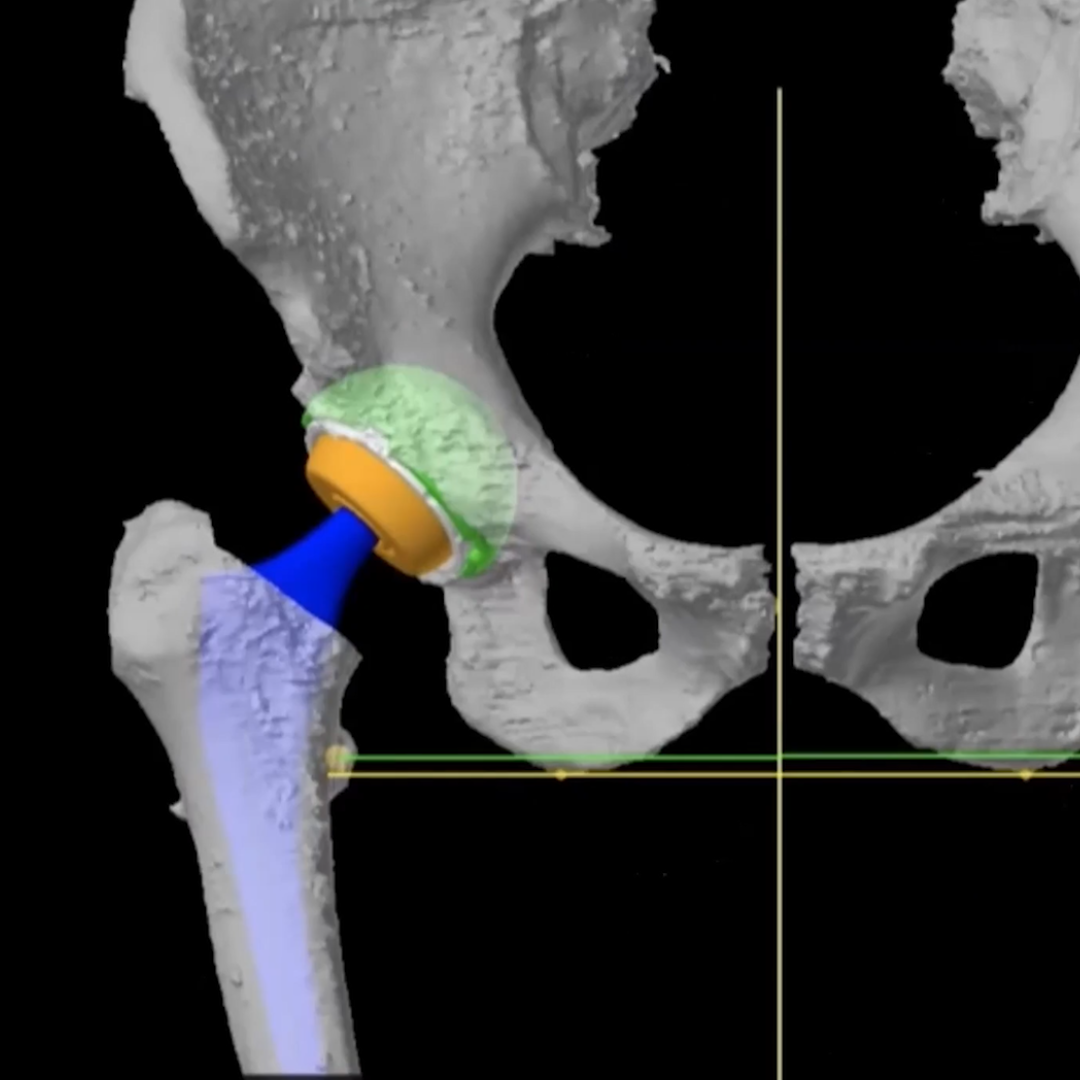
A CT scan of your knee is taken before surgery and used to build a three-dimensional model of your unique anatomy. This allows me to virtually simulate the entire procedure, plan implant placement, and anticipate balancing needs based on your specific bone structure and joint alignment.
Real-Time Intraoperative Balancing Data
During surgery, the Mako system provides live measurements of soft tissue tension in both flexion (knee bent) and extension (knee straight). Instead of relying on feel alone, I can see objective numbers on the screen showing exactly how the medial and lateral compartments of your knee are loading. The system measures gap distances and laxity to the half-millimeter, giving me the information I need to make precise adjustments to the surgical plan before committing to any permanent bone cuts.
Ligament Balancing Workflow
The Mako software offers two balancing techniques I can choose from based on your individual needs. In one approach, the bone cuts are made first to set the extension gap, and then the flexion gap is balanced by adjusting the femoral component position. In the other, I can assess and balance the gaps before any bone is cut. Both approaches allow real-time fine-tuning that simply isn't available in conventional surgery.
AccuStop Haptic Technology
The Mako robotic arm uses haptic boundaries, essentially virtual guardrails, that keep the saw within the planned cutting zone. This protects surrounding soft tissues from accidental damage during bone preparation, which directly supports better post-operative balance and stability.
What the Research Tells Us About Robotic Knee Balancing
The clinical evidence supporting robotic-assisted knee balancing continues to grow. A study evaluating 200 consecutive Mako robotic total knee replacements found that combining the robotic platform with intraoperative sensor feedback increased the rate of balanced knees from 67% to 87% of cases. That's a meaningful improvement over the roughly 50% balance rate seen with manual instruments alone.
Research has also shown that 95% of Mako cases achieved virtual balancing within 1 mm, and 93% of patients showed a well-balanced knee in extension at the end of surgery. These numbers matter because balanced knees consistently lead to better patient-reported outcomes.
Another finding worth noting: the data showed that having equal gaps on the robotic screen doesn't always guarantee a balanced knee once the implants are in place. This is exactly why the combination of robotic planning and real-time sensor feedback is so valuable. The two technologies work together to give your surgeon the most complete picture possible.
What Balanced vs. Unbalanced Feels Like After Surgery
Patients often ask me what a balanced knee actually feels like compared to one that isn't balanced. The difference is usually noticeable.
A well-balanced knee typically feels:
- Stable when walking on flat ground and stairs
- Natural during bending and straightening motions
- Evenly loaded without a pulling sensation on one side
- Confident during daily activities without a sense that the knee might "give way"
Signs of an unbalanced knee may include:
- Persistent tightness or stiffness that doesn't improve with therapy
- A sensation of looseness or instability in certain positions
- Pain concentrated on one side of the knee
- Difficulty achieving full range of motion despite consistent rehabilitation
Not every post-surgical symptom indicates imbalance, of course. Some stiffness and discomfort are completely normal during the early recovery period. But a knee that was well-balanced during surgery tends to feel more natural, more quickly.
Why This Matters for Nashville Knee Replacement Patients
I perform Mako robotic knee replacements at my practice in the Nashville, Tennessee area because I believe the technology gives my patients a real advantage. The ability to plan in three dimensions, measure soft tissue tension in real time, and make adjustments before making permanent cuts is a meaningful step forward in how we approach total knee arthroplasty.
No technology replaces surgical experience and judgment. The Mako system is a tool that enhances what an experienced surgeon can do. It puts objective data alongside clinical instinct, and that combination consistently leads to better balanced knees.
If you're dealing with knee arthritis and considering a joint replacement, understanding how your surgeon plans to balance your knee is a great question to bring to your consultation.
Key Takeaways
- Knee balancing means ensuring the ligaments and soft tissues around your new knee joint are properly tensioned so forces distribute evenly
- Traditional manual techniques achieve a balanced knee in about 50% of cases, while robotic-assisted methods combined with sensor technology can reach 87%
- The Mako system uses 3D CT planning and real-time intraoperative data to measure balance with sub-millimeter precision
- A well-balanced knee leads to faster recovery, less pain, greater stability, and improved long-term implant performance
- Ask your surgeon how they plan to assess and achieve balance during your knee replacement
Medical Disclaimer: This information is for educational purposes only and should not replace professional medical advice, diagnosis, or treatment. Always consult with a qualified healthcare provider before making any decisions about your health or medical conditions. Individual results may vary based on personal health circumstances.
Ready to Talk About Robotic Knee Replacement?
If you're experiencing knee pain from arthritis and want to learn whether Mako robotic knee replacement is right for you, Dr. Cory Calendine is accepting new patients in the Nashville, Tennessee area. Contact our office to schedule a consultation and ask about how knee balancing technology can make a difference in your outcome.
About the Author
Dr. Cory Calendine is a board-certified orthopedic surgeon specializing in total and partial joint replacement in the Nashville, TN area. He uses Mako robotic-assisted technology to provide his patients with precision-guided surgical care. Dr. Calendine is committed to patient education and evidence-based orthopedic treatment.
Frequently Asked Questions
What does "knee balancing" mean during a robotic knee replacement?
Knee balancing is the process of adjusting soft tissue tension and implant positioning so that the forces across your new knee joint are distributed evenly between the inner and outer compartments. During Mako robotic surgery, your surgeon uses real-time data to measure these forces and make precise adjustments before finalizing the procedure.
How does the Mako robot help with soft tissue balance during total knee replacement?
The Mako system uses a pre-operative CT scan to create a 3D model of your knee, then provides live intraoperative measurements of ligament tension and gap balance. This allows the surgeon to see objective data on a screen rather than relying on feel alone, which research shows improves the rate of achieving a balanced knee.
Can poor knee balance cause problems after knee replacement surgery?
Yes. An unbalanced knee can lead to uneven wear on the plastic liner, pain concentrated on one side of the joint, instability, and in some cases, the need for revision surgery. Studies show that patients with balanced knees report better outcomes and recover functional milestones sooner.
Is Mako robotic knee replacement available in Nashville, TN?
Yes. Dr. Cory Calendine performs Mako robotic-assisted total and partial knee replacements in the Nashville, Tennessee area. The technology is used to improve implant positioning, soft tissue balance, and overall surgical precision.
How accurate is knee balancing with the Mako robotic system?
Research shows that 95% of Mako cases achieve virtual balancing within 1 mm of the plan, and combining the robotic platform with intraoperative sensors can achieve a balanced knee in up to 87% of cases, compared to roughly 50% with conventional manual techniques.
References:
- Gordon AC, Conditt MA, Verstraete MA. Achieving a Balanced Knee in Robotic TKA. Sensors. 2021;21(2):535.
- Gustke KA, Golladay GJ, Roche MW, et al. Primary TKA patients with quantifiably balanced soft-tissue achieve significant clinical gains sooner than unbalanced patients. Adv Orthop. 2014;2014:628695.
- Song EK, Seon JK, Yim JH, et al. Robotic-assisted TKA reduces postoperative alignment outliers and improves gap balance compared to conventional TKA. Clin Orthop Relat Res. 2013;471(1):118.
- Elmallah RK, Mistry JB, Cherian JJ, et al. Can we really "feel" a balanced total knee arthroplasty? J Arthroplasty. 2016;31(9 Suppl):102.
- Shalhoub S, Lawrence JM, Keggi JM, et al. Imageless, robotic-assisted total knee arthroplasty combined with a robotic tensioning system can help predict and achieve accurate postoperative ligament balance. Arthroplast Today. 2019;5(3):334.